

Blog #1 - Gaia
- Solaris The Artist

- Apr 19
- 5 min read
A look into our world - Understanding humanity
Earth, our home, this beautiful green and blue “marble” that orbits the Sun. She goes by many names: Gaia/Gaea (Greek), Terra (Latin), Bhumi Devi (Hindu), Pachamama (Indigenous the of Andes), and Sol-3 (Star designation + Orbit number), just to name a few. Our home is the only planet in the observable Universe to host life, ponder on this for a moment. The Universe is MASSIVE, while the Universe itself is only 13.8 billion years old, the diameter of the observable Universe is approx. 94 billion light years. That means it would take 94 billion years for light on one side of the observable Universe to reach the other side, and this is just the part of the Universe we’re able to see! Just think, if the Universe is that large, why are we the only life forms in it?

Coming back to Earth though, given those facts it’s a bit mind-blowing that our Mother Earth is being ravaged and taken for granted. In less than 500 years, humans have polluted and damaged the Earth almost to the point of no return. Some would argue that it started long before that, about 11,000 years ago during the rise of agriculture. Yes, our planet has constantly been changing since Her birth, but She has always been able to maintain a sort of equilibrium that, within the last millennium, has been thrown way off balance. If you like reading books, I would implore you to read the Earth’s Children series by Jean M. Auel; a deep dive into the way humans inhabited the Earth without destroying Her, taking care of the planet that took care of them. Gaia gave us everything we needed: food, clean (drinkable) water, medicine, even materials to build our own shelters and communities. Land didn’t have to be “bought” or paid for to occupy, the only thing required was contribution to the community. Whether that was building the shelters, hunting for food, gathering herbs for medicine, cooking and even crafting, everyone had a vital role within the community they resided in and everyone worked together to help the community thrive and stay functional.

Let’s talk about the world we live in now, the system designed to keep us in a constant state of survival. A continuous state of dissatisfaction due to the ongoing pursuit of "accessibility", the mindset of “How far can the human mind go? How far will our ingenuity take us to make everything easier?” It seems like the intentions are pure, but the mindset itself is extremely nearsighted, mainly focusing on short-term goals. Once that goal is achieved, “How can we outdo ourselves?” follows immediately after. The more we try to “outdo” ourselves, the more that dissatisfaction grows, we are never content with the accessibility we already have. In an effort to better our technology, Gaia’s resources are plundered and pillaged like there is an infinite amount. Think about this for a moment: a lot of the minerals that we find on Gaia are found abundantly in the Solar System, but plant life is actually the rarest resource in the entire Universe. Trees, grass, flowers, where else but Earth could you find them? Why do we take our planet for granted the way we do? 2 reasons: 1) At the root of everything, it is the greed of power, control and money (a manmade concept), dressed as the mindset of “How far can we go?” as stated earlier. 2) To enhance our technology for convenience and for the possibility of exploring other worlds. Let’s look at some exoplanets that could possibly sustain humans, first up is the TRAPPIST-1 star system in the constellation of Aquarius, approx. 40 light years away. TRAPPIST-1 has 7 earth-sized exoplanets (listed B through H), only TRAPPIST-1e, TRAPPIST-1f and TRAPPIST-1g are in the habitable zone with TRAPPIST-1e being the best candidate. Next up is Kepler-22b in the Cygnus constellation, approx. 635 light years away. Then there’s Kepler-62f in the constellation of Lyra, ~1200 light years. Last but not least, Kepler-69 in the Cygnus constellation, ~2700 light years. How could we get there?

Answer: We can’t. Even with TRAPPIST-1e being the closest, it would take 40 years to get there traveling at the speed of light (~669,600,000 mph). The simple fact that we cannot travel that fast means it would take WELL over 40 years for us to get to the nearest habitable exoplanet, should we damage our home beyond repair. Plus from the fact that we don’t have the technology to successfully reanimate humans from cryostasis, it’s just not possible. But given these facts, if we took care of our home the way our ancestors did, we wouldn’t have to spend lifetimes trying to invent this technology, we wouldn’t have to search for another planet to live on.

I want to bring your attention to something else for a moment, just to put into perspective how gravely important our atmosphere is. As we know, the atmosphere is a sort of shield, protecting us from the heat and harmful UltraViolet rays of the Sun while also allowing us to have air to breathe (it is also the reason the sky appears blue; will be explained in a much later Science Blog). If it were to suddenly disappear, we would be subject to the vacuum of outer space, all life would be eradicated because of the unfiltered heat of the Sun. But even with the atmosphere protecting us, the Sun plus manmade chemicals and the burning of fossil fuels still causes major damage. When manmade chemicals released on Earth’s surface drift up into the atmosphere, UV radiation breaks apart these molecular compounds which damages the Ozone Layer. Remember the hole? That kind of damage greatly increases the risk of cancer and other harmful health issues. Another thing to be mindful of is how our atmosphere actually traps certain gasses, making the Earth even hotter. Here’s a question to think about: Which planet in the Solar System is the hottest? If you don’t already know, your first guess would be Mercury right? I mean, it is the closest planet to the Sun, and it barely has an atmosphere (called an exosphere), so it has to be the hottest, right? Wrong. The hottest planet is actually Venus, the second planet from the Sun, and the reason for this is a phenomenon called the Greenhouse Effect.
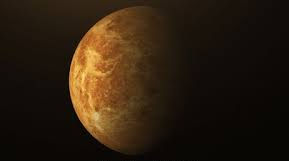
Venus has the thickest atmosphere of any planet in the Solar System, chock full of carbon dioxide (CO2). Because the atmosphere is so thick with CO2, it traps more heat from the sun inside the “protective shield”, making it a literal hellscape full of volcanic activity and toxic gasses. Now think about the amount of CO2 we emit on average per year, per month even, because we’re constantly expending resources and energy to produce and scavenge for more, all in the name of “convenience”. Will human hunger ever be satiated? Or would we tear apart our home before we could be content with what we already have?
To be continued in the next blog (updated every Sunday). Thanks for tuning in!
-Solaris The Artist
Resources:

Comments